Basic steps to firing up a live steam locomotive
We’ll assume for the moment that you have acquired a live steam locomotive,
and you’ve read the manufacturer’s instructions which came with it.
(If you haven’t yet purchased one, this course will acquaint you with the information on which you can make a decision… read on!)
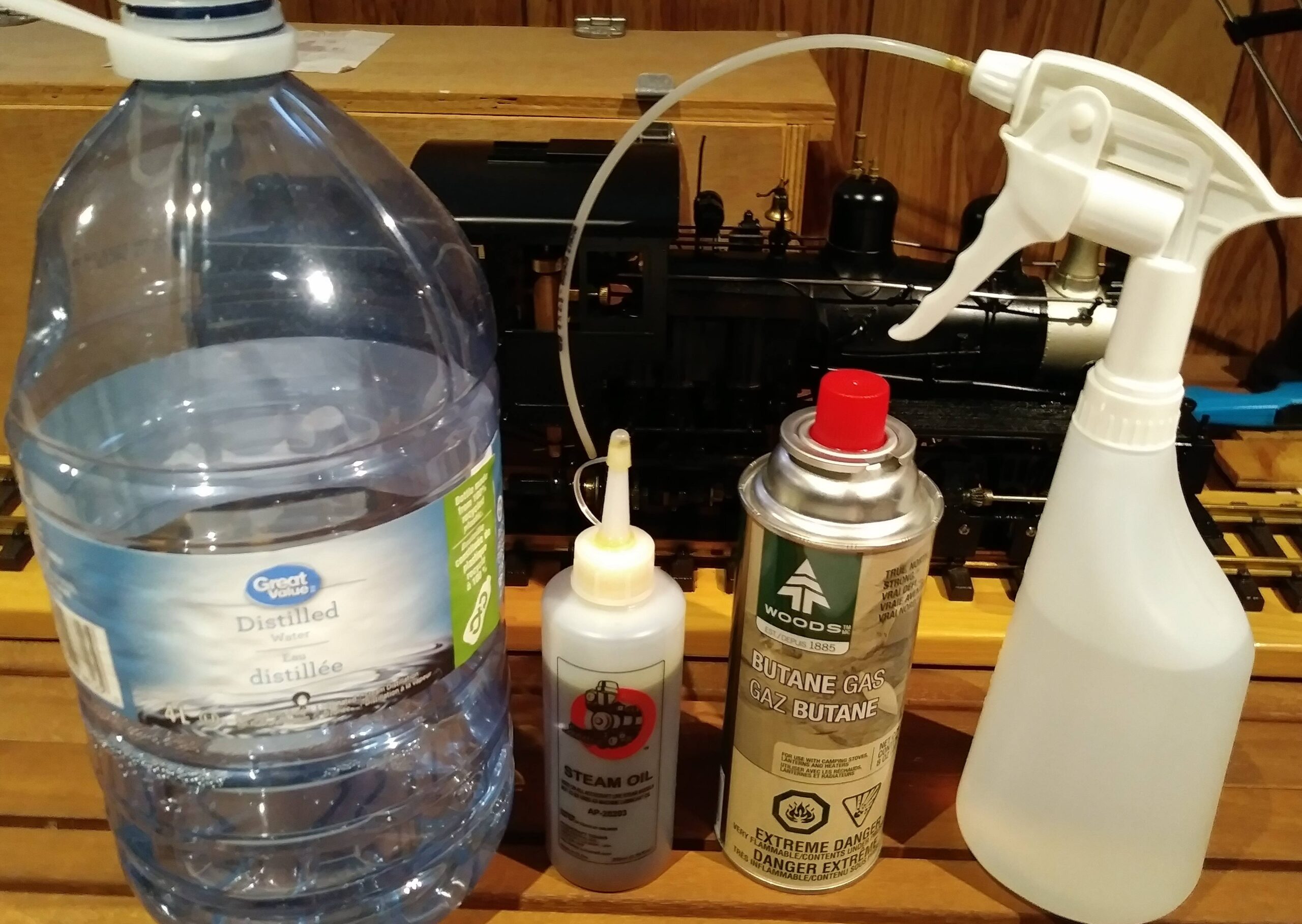
You will need a supply of fuel, water, and “steam oil.”
Most models burn butane gas as fuel.
“Water” seems self-explanatory, except that to avoid damaging your locomotive, it wants to be distilled water, free of impurities.
“Steam oil” is a special heavy-density formulation which holds up well under high heat and serves to lubricate inside the engine as it runs.
Water is the most important step.
Your manufacturer likely suggested 3 steps of preparation: gas, oil, water.
A more preferable sequence to remember is “water, oil, gas.”
We suggest this so that you are always aware of the water level in your locomotive’s boiler.
NEVER NEVER ALLOW THE BOILER TO RUN OUT OF WATER!
Adding water
At right is a typical water inlet arrangement.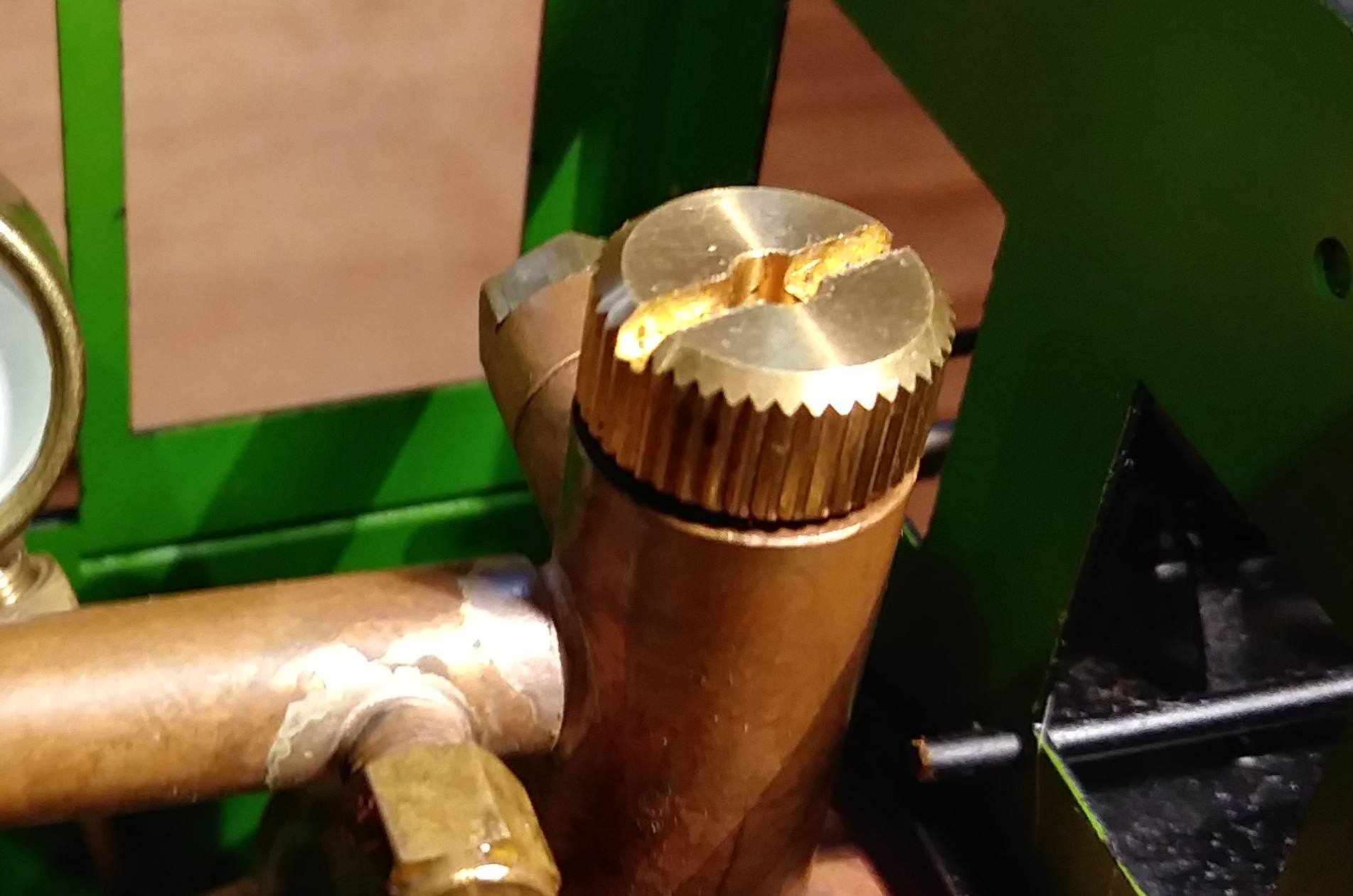
Remove the threaded plug, and fill the boiler with distilled water to approximately 2/3 of its capacity (typically 200 to 250 cc).
Do not fill all the way to the top, leave some room for expansion and steam.
Adding steam oil
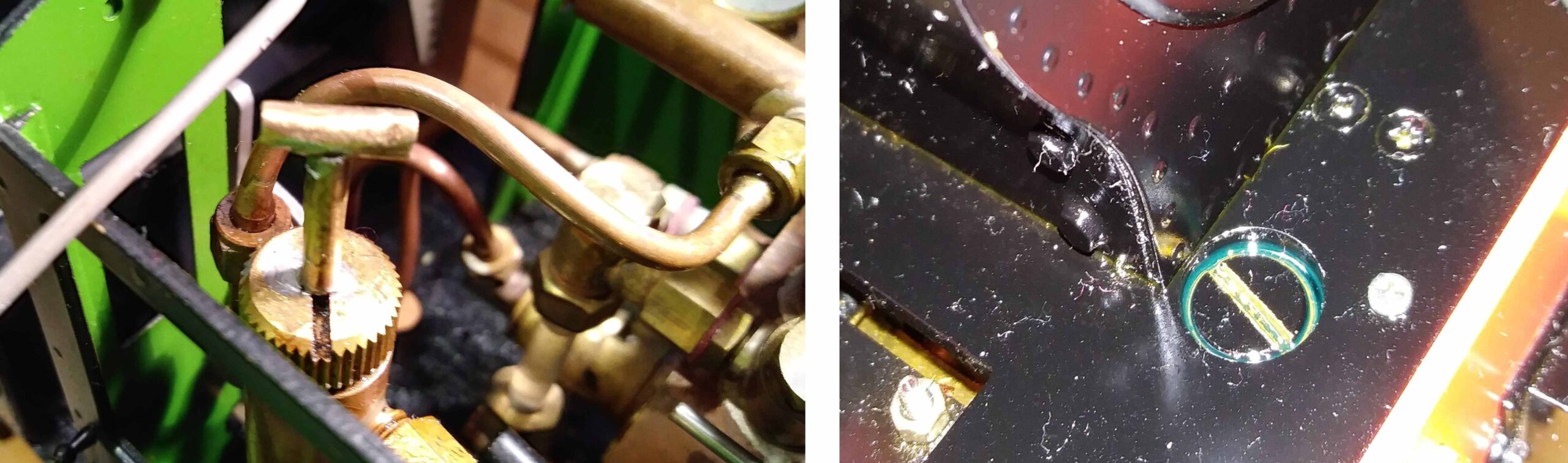
The next step is to top up the steam oil reserve. On some locomotives, this port has a small “tee” handle on top to facilitate opening. On others, you’ll need a screwdriver to open the tank.
Fuel up
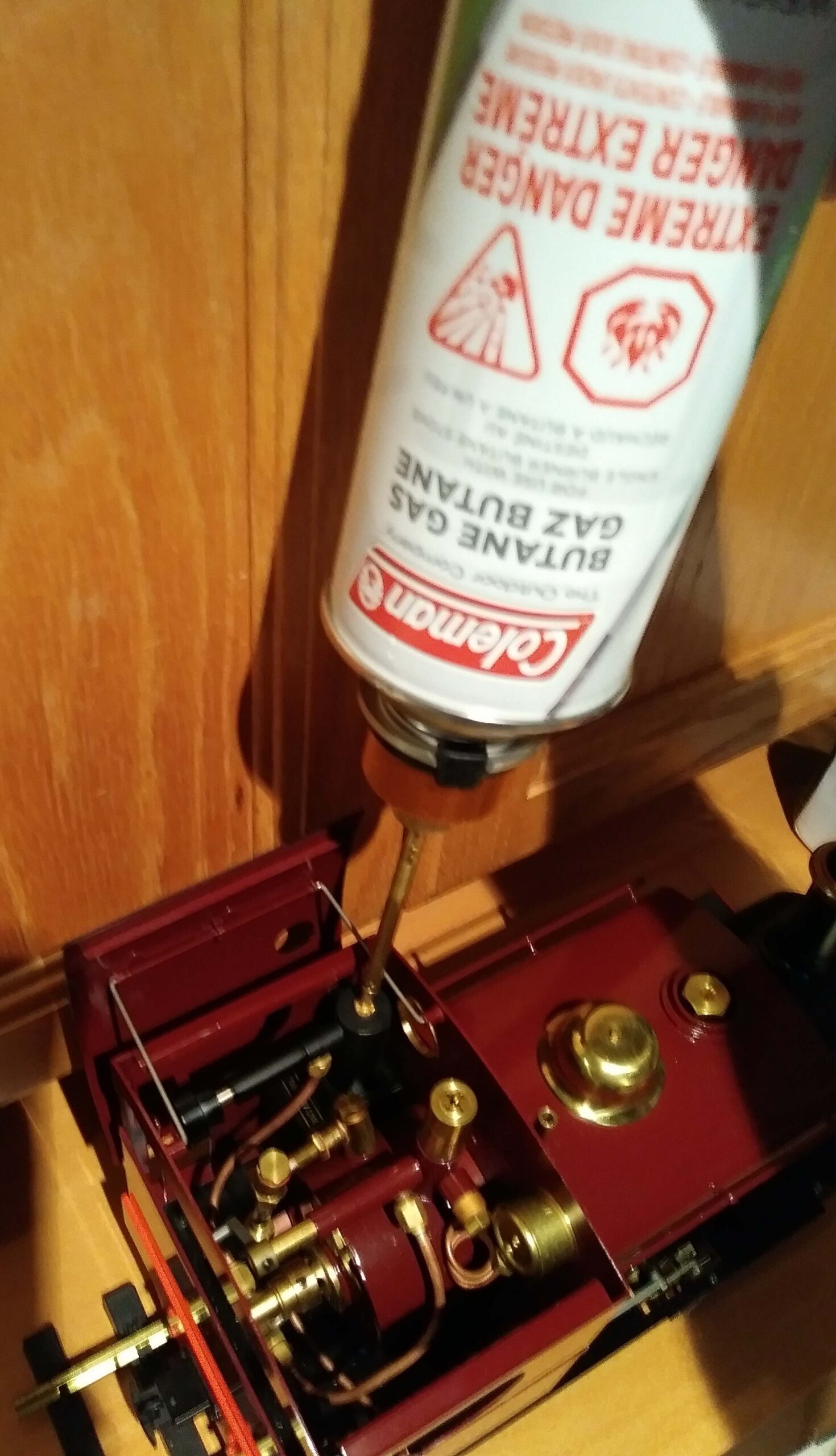
Make sure the gas valve is completely closed.
Apply a butane canister as shown, pressing down to flow gas into the locomotive until the reservoir is full, when gas begins to escape from the filler valve.
Lighting up
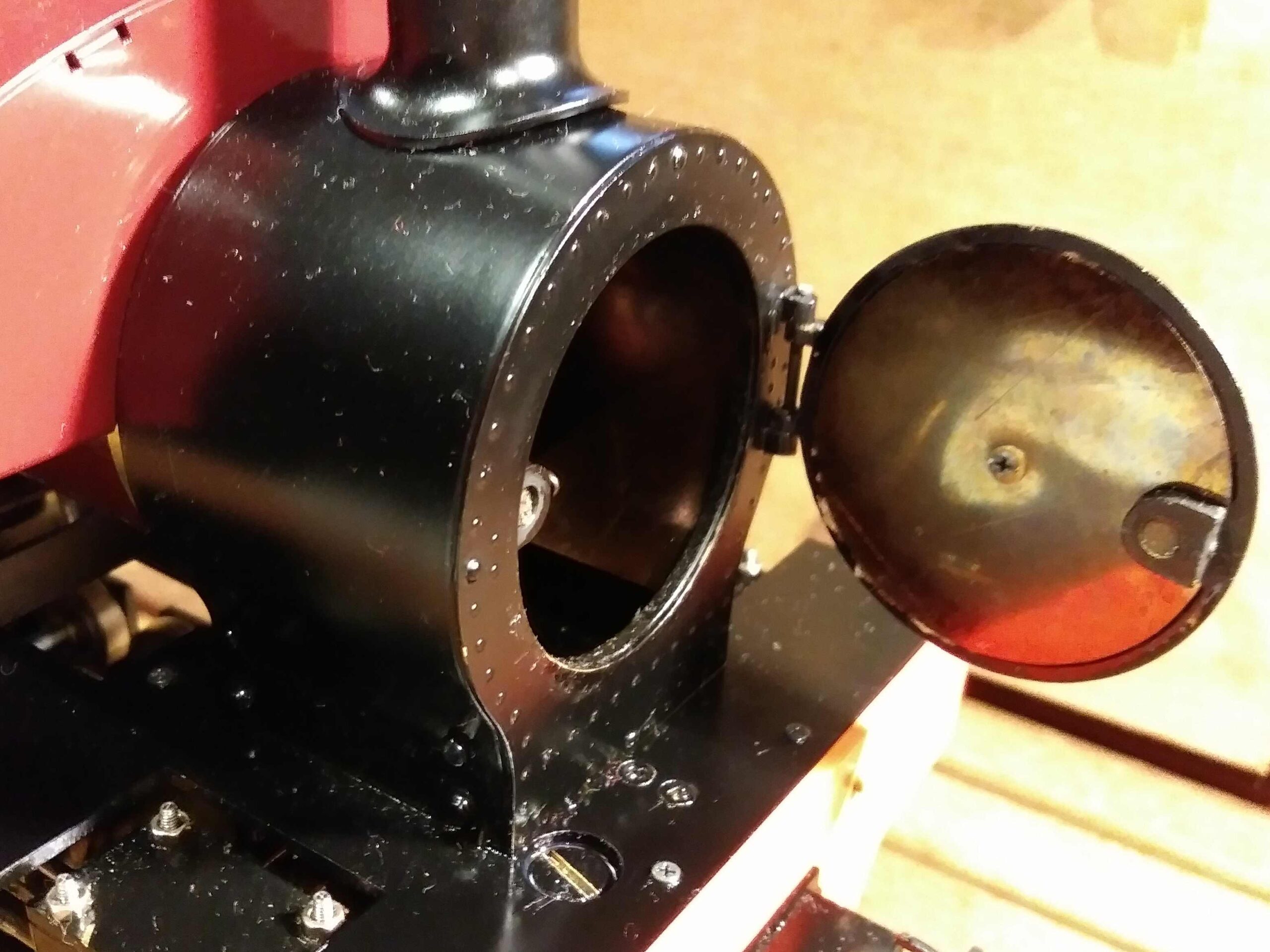
Step 1. Open the front of the locomotive
Otherwise known as the “smoke box.”
Step 2. Left hand on the gas valve
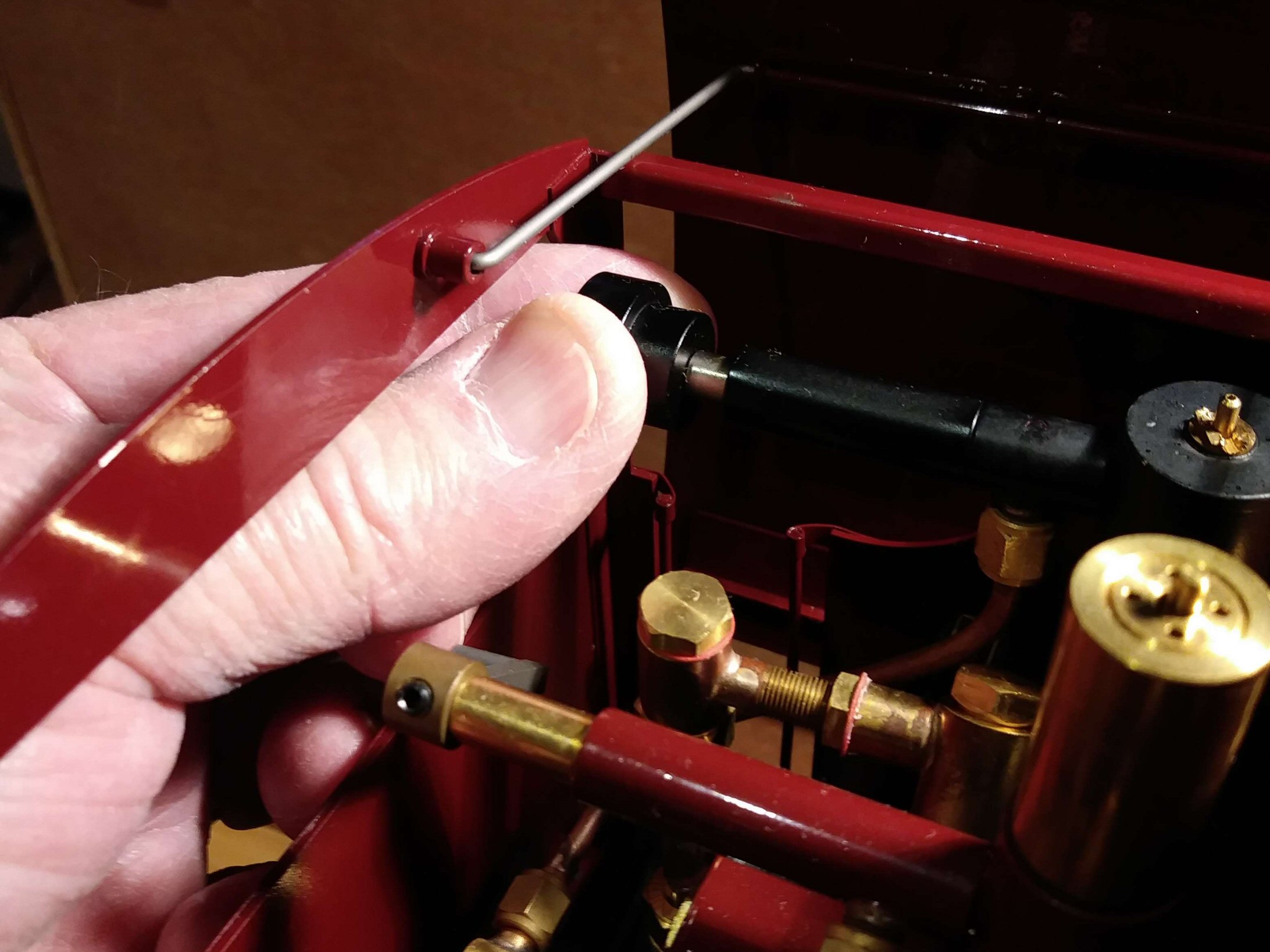
Make sure the gas valve is completely closed.
Get ready to open it just a crack.
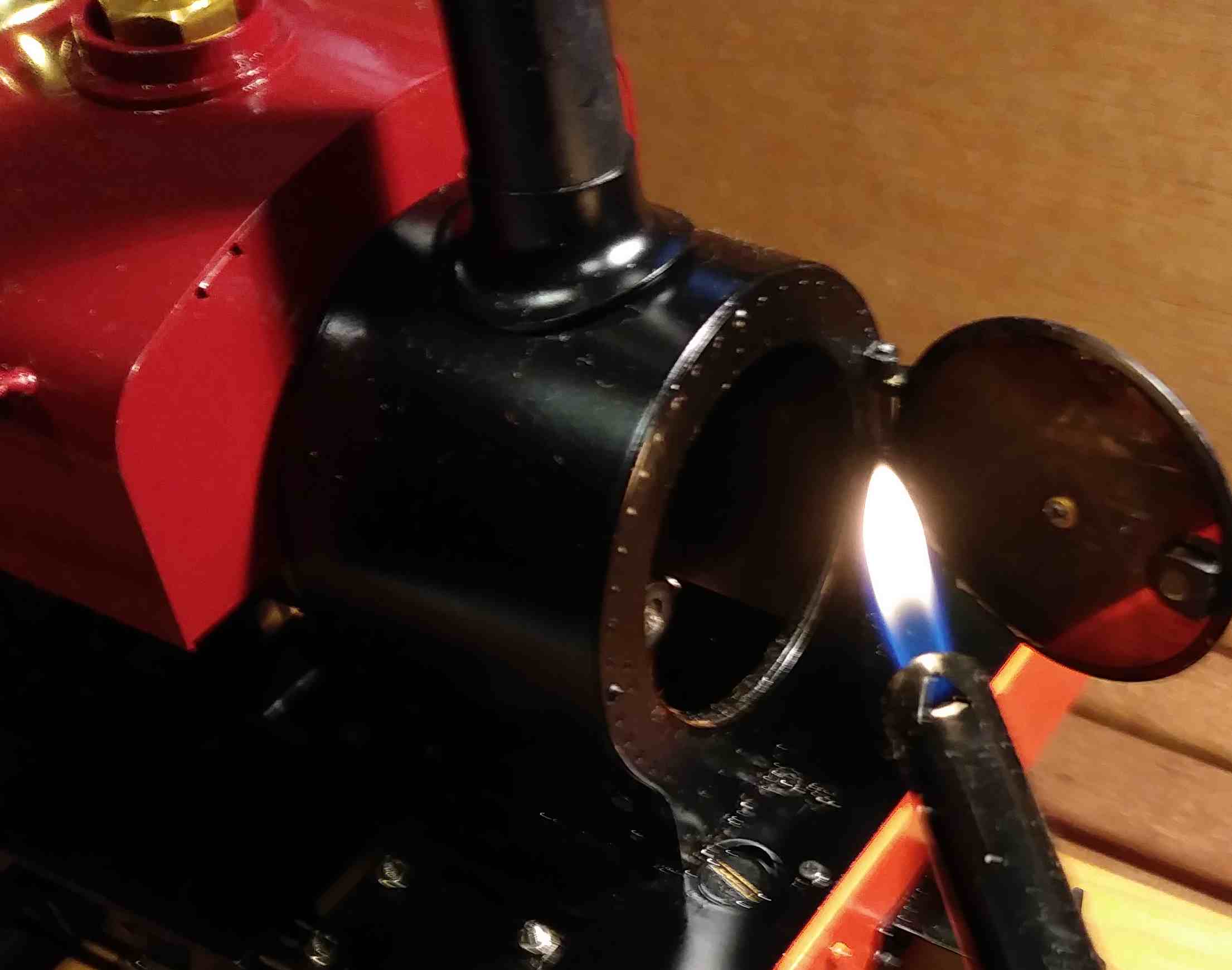
Step 3. Put a flame to the access door.
A match will work, but a lighter is brighter.
Step 4. Crack open the gas valve.
Burner will light with a “pop.”
Note: if flames flash out of the front of the locomotive, turn the gas OFF for a moment, then repeat Steps 2 through 4.
(Some experienced operators will blow on the flame to snuff it out, but it’s not recommended, and may be harmful to those bearing a moustache.)
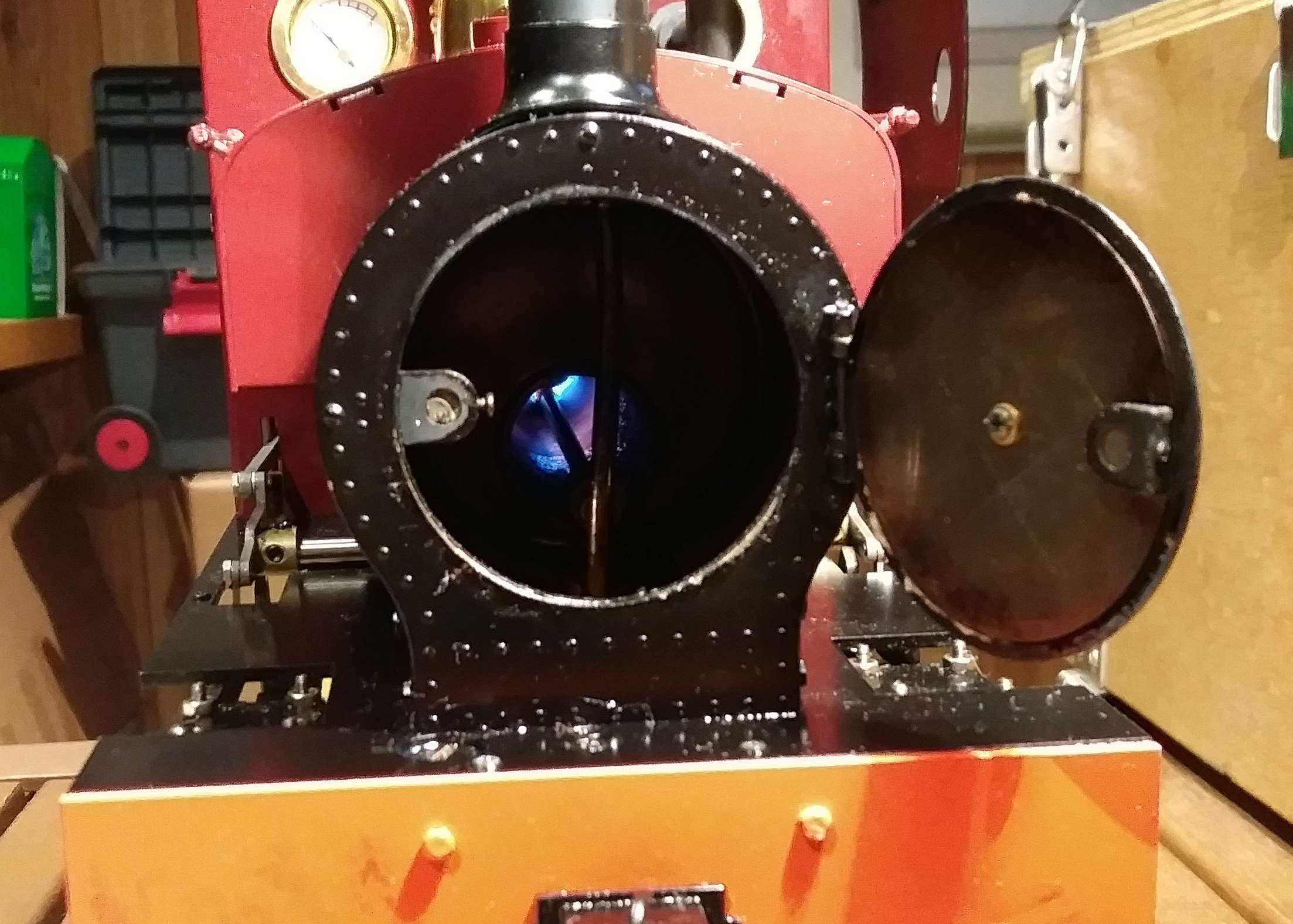
Step 5. Looking down the barrel of the locomotive.
A healthy flame means steam is on the way!
The burner will emit a distinct sound — listen for that as it is warming up.
Close the access door. Listen that the burner doesn’t flame out.
Summary
With a little practice, you’ll be able to light up the burner easily.
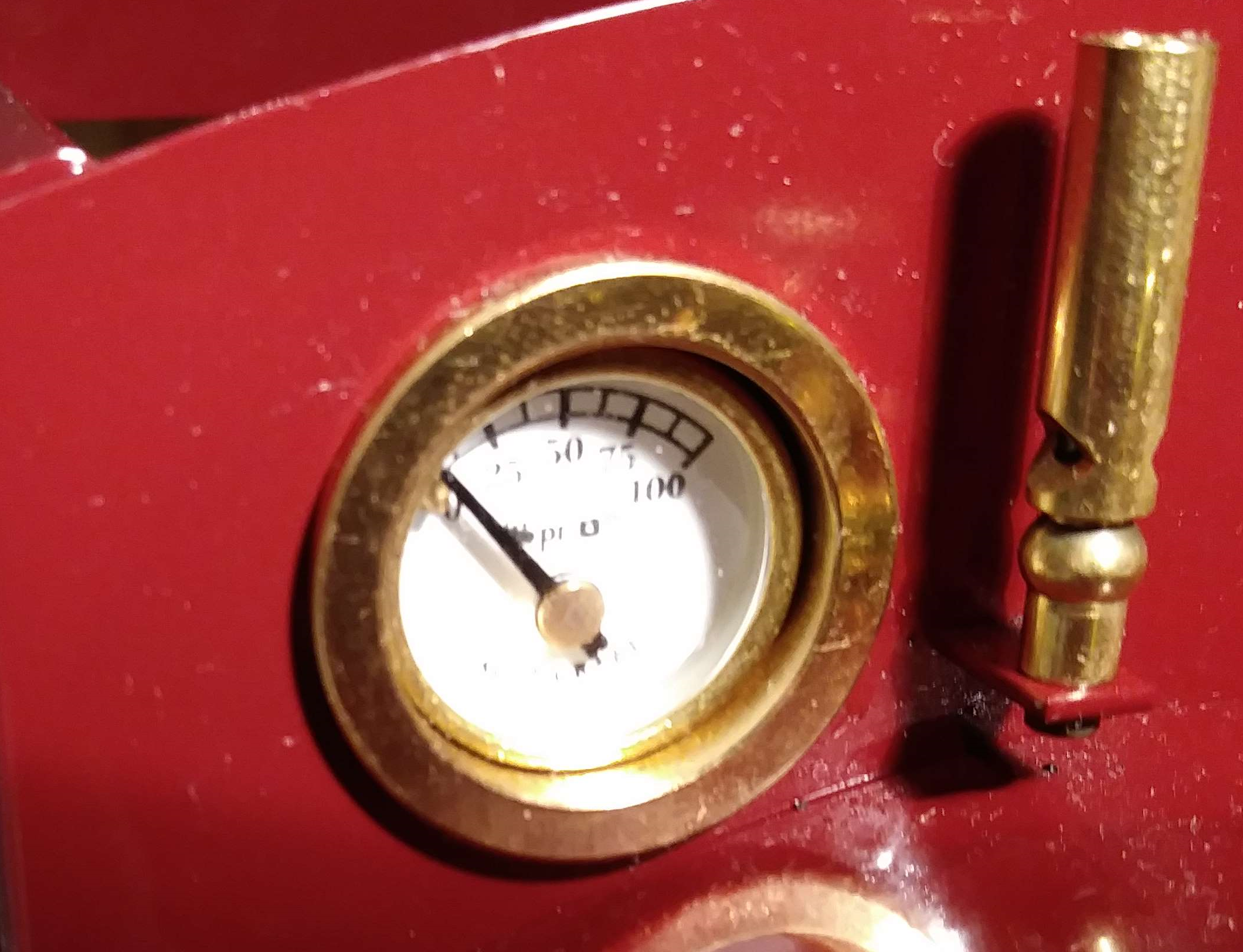
It’ll take 10 to 12 minutes to make steam. Watch the pressure gauge.
Above 40 psi, there should be enough to start the locomotive.
Click here to proceed –>